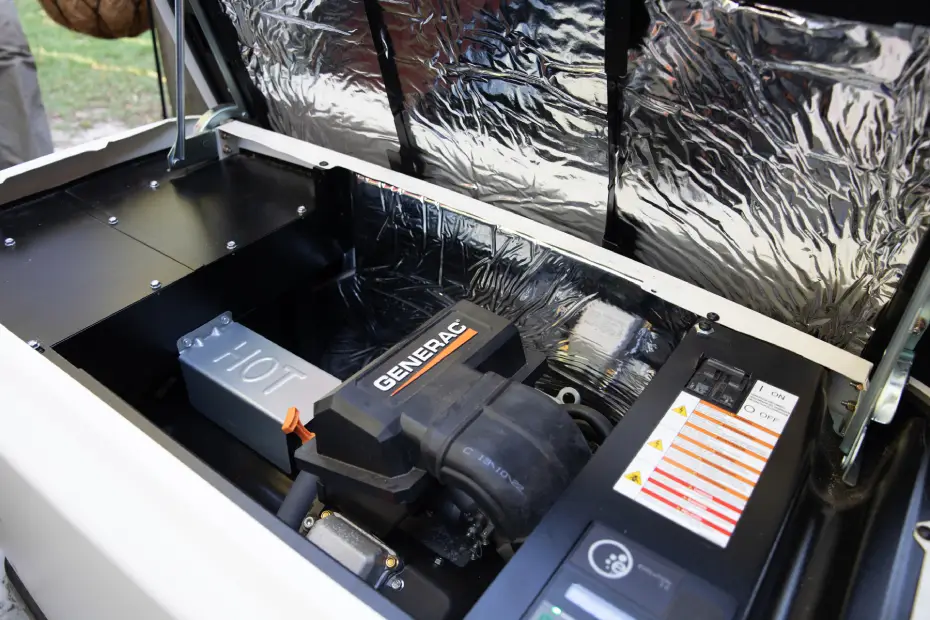
A loud generator can disrupt your household and bother your neighbors. In the Evans area, where homes sit close together, noise is a real concern. The good news is that proper placement during installation makes a measurable difference. Some placement strategies can reduce perceived noise by 10 to 15 decibels without adding expensive equipment.
Key Takeaways
- Place your generator at least 20 feet from your home and neighboring properties.
- Position the exhaust end away from windows, doors, and living spaces.
- Use a solid surface like a concrete pad to reduce vibration noise.
- Natural barriers such as fences or dense shrubs can absorb sound.
- Anti-vibration mounts reduce the hum that travels through the ground.
- A licensed electrician should handle all wiring and final placement decisions.
Why Generator Placement Affects Noise Levels
Sound travels in all directions, but placement controls where that sound goes. A generator sitting right next to your back door will flood your kitchen with noise. Moving it farther away or angling the exhaust differently changes what you hear inside your home.
Distance is the simplest tool you have. Every time you double the distance between you and the generator, the noise level drops by about 6 decibels. That may not sound like much, but 6 decibels is a noticeable difference to the human ear.
The Exhaust Direction Rule
The exhaust port is the loudest part of any generator. Point it away from your house. Point it away from your neighbor’s house too. Many homeowners in Evans aim the exhaust toward the street or an open yard area. This single step alone can reduce indoor noise significantly.
If you have a standby generator installation planned, your electrician can factor exhaust direction into the placement plan from the start. It is much easier to position correctly during installation than to move the unit later.
Surface and Foundation Choices That Cut Vibration
Generators vibrate when they run. That vibration travels through whatever surface they sit on. If you place a generator on a wood deck or loose gravel, the vibration amplifies. A solid concrete pad is the standard choice for a reason.
Concrete absorbs and disperses vibration rather than amplifying it. The pad should extend at least six inches beyond the generator on all sides. This gives the unit a stable, flat surface that limits movement.
Anti-Vibration Mounts and Pads
Even on concrete, vibration can still transfer noise. Anti-vibration mounts sit between the generator feet and the pad. They are made of rubber or composite materials that absorb the mechanical energy before it reaches the ground.
You can also place a rubber anti-vibration mat under the entire unit. These are inexpensive and easy to add during installation. AW Electric recommends combining a concrete pad with vibration mounts for the best results in residential settings.
Using Barriers to Block and Absorb Generator Noise
Solid barriers between the generator and your living space reduce noise levels. A wooden fence, a concrete block wall, or dense landscaping all work. The barrier needs to be taller than the generator to be effective. A barrier that is too short lets sound pass right over it.
For homeowners in Evans, a combination approach works well. Place a fence or wall on the side facing your home, and use shrubs or hedges on the sides facing neighbors. This spreads the sound reduction across multiple directions at once.
What to Avoid When Building a Barrier
Do not completely enclose your generator. Generators need airflow to run safely. Enclosing the unit fully can cause it to overheat and fail. Any barrier you build must allow for proper ventilation on at least two sides.
Also, keep barriers at least three feet from the unit. Too close and the barrier can trap heat and exhaust fumes. AW Electric always checks airflow requirements before recommending any barrier setup during a generator installation. Safety and noise reduction need to work together, not against each other.
If you are unsure how many kilowatts your home needs before installation, check out this guide on how many kW to power a house before you buy.
Additional Steps to Reduce Generator Noise
Placement handles most of the noise problem, but a few extras help even more. First, keep your generator well maintained. Worn parts, loose bolts, and a dirty air filter all increase noise output. A well-tuned generator runs quieter by design.
Second, check that all exhaust components are tight. Loose exhaust connections rattle and add to the overall noise level. Third, consider a generator with an inverter design if you are still in the shopping phase. Inverter generators run quieter than conventional models under light loads.
Transfer Switch and Wiring Considerations
Your generator’s location also affects how the wiring is run. A unit placed too far from your electrical panel may require longer wire runs, which adds cost and complexity. An electrician can help you find the best spot that balances noise reduction with practical wiring distance.
AW Electric handles both the placement planning and the electrical work, so you do not have to coordinate between two contractors. For a safe, code-compliant connection, learn about transfer switch installation before your project begins.
Frequently Asked Questions
How far should a generator be from my house to reduce noise?
Most experts recommend at least 20 feet from your home. That distance reduces noise and also keeps exhaust fumes away from windows and doors. Local codes may require a specific minimum distance, so check with your electrician before finalizing placement.
Can I put a generator inside a shed to make it quieter?
You should never run a generator inside any enclosed structure, including a shed. Generators produce carbon monoxide, which is a colorless, odorless gas that can be fatal. Ventilation must be adequate at all times. A three-sided enclosure with an open top or side is safer than a fully enclosed shed.
Does a generator get louder as it ages?
Yes, generators can get louder over time if they are not maintained. Loose parts, worn mounts, and clogged air filters all increase noise levels. Regular maintenance, including oil changes and bolt checks, keeps the unit running at its designed noise level.
What is the quietest type of generator for a home?
Inverter generators are generally the quietest option for home use. They adjust engine speed based on the load, which means they run slower and quieter when demand is low. Standby generators with variable-speed engines also offer quieter operation compared to older fixed-speed models.
Do I need a permit to install a generator in the Evans area?
Most jurisdictions require a permit for a permanent standby generator installation. The permit process typically covers the electrical work, the gas line connection, and the placement on your property. A licensed electrician handles the permit application as part of the job. AW Electric manages this process for customers in the Evans area.
Ready to Install Your Generator the Right Way?
Noise reduction starts with a smart installation plan, not an afterthought. The right surface, the right distance, the right exhaust direction, and the right barriers all work together to keep your home quieter when the power goes out.
AW Electric serves the Evans area and surrounding communities with residential and commercial electrical work. The team understands local code requirements and knows how to position a generator for both safety and noise control. If you are planning a new installation or want to improve your current setup, reach out to AW Electric at awelectricllc.com to get started.