Power outages hit Evans, GA, harder than most people expect. Storms roll through fast, and you may be without power for hours or even days. It makes sense that homeowners want to hook up a generator quickly and get things running again. But if you’ve been searching for how to connect a generator to your house without a transfer switch, you need to understand what’s at stake before you start.
The short answer is that it’s possible in very limited situations, but for most homes, a transfer switch isn’t optional. It’s a requirement.
Key Takeaways
- Connecting a generator directly to your home’s wiring without a transfer switch is illegal in most cases and extremely dangerous.
- Backfeed from a generator without a transfer switch can kill utility workers on the line outside your home.
- The National Electrical Code requires a transfer switch or interlock kit for any permanent or semi-permanent generator connection.
- Portable generators can power individual appliances safely through extension cords without a transfer switch.
- A licensed electrician must install a transfer switch to meet Georgia code requirements.
- A W Electric provides generator installation in Augusta and the surrounding Evans area.
What Happens When You Skip the Transfer Switch
A transfer switch disconnects your home from the utility grid before your generator sends power through your wiring. Without it, power from your generator can travel back through your meter and out onto the utility lines. This is called backfeed. Utility workers restoring power in your neighborhood may not know your generator is still energizing those lines. That backfeed can kill them.
Beyond the danger to others, backfeed also puts your home at serious risk. When utility power is restored while your generator is running, the two power sources can clash. That collision can destroy your generator, damage your appliances, and start a fire inside your walls.
The Legal Side You Cannot Ignore
Georgia follows the National Electrical Code, which requires an approved means of disconnection between a generator and the utility grid. That means a transfer switch or an interlock kit. If you wire a generator directly into your panel without one of these, you are violating the state electrical code. Your homeowner’s insurance may also deny a claim if a fire or electrical damage is traced back to an unpermitted generator connection.
A proper transfer switch installation protects your family, your neighbors, and your coverage. It’s not extra paperwork. It’s the law.
When You Can Use a Generator Without a Transfer Switch
There is one scenario where you don’t need a transfer switch. That is when you power appliances directly through heavy-duty extension cords plugged into the generator’s outlets. This method keeps the generator completely separate from your home’s wiring. No backfeed risk, no code violations, no hazard to utility workers.
This approach works for a refrigerator, a window AC unit, a fan, or a lamp. It does not power your lights, your HVAC system, or anything hardwired into your home. For most Evans homeowners dealing with a real outage, this falls short of what they need.
What a Transfer Switch Actually Does for You
A transfer switch gives you a safe, legal way to run selected circuits in your home from a generator. A manual transfer switch lets you flip a lever to disconnect from the grid and switch to generator power. An automatic transfer switch does this automatically when it detects a power outage. If you want to know more about connecting a generator with a whole-home installation, that option covers your entire panel, not just a few circuits.
The right setup depends on your generator’s output, your home’s size, and which circuits matter most to you. A W Electric can walk you through those choices and size the system correctly from the start.
Choosing the Right Generator Setup for Your Evans Home
Not every generator is the same, and not every home needs the same solution. A small portable generator paired with extension cords may be enough if you only need to keep food cold and charge your phones. But if you want your HVAC, well pump, or medical equipment running during an outage, you need a larger unit and a proper transfer switch.
If you’re unsure what size generator your home needs, that’s a smart question to answer before you buy anything. Undersizing your generator leads to overloads. Oversizing wastes money on fuel and equipment.
Standby Generators and Automatic Transfer Switches
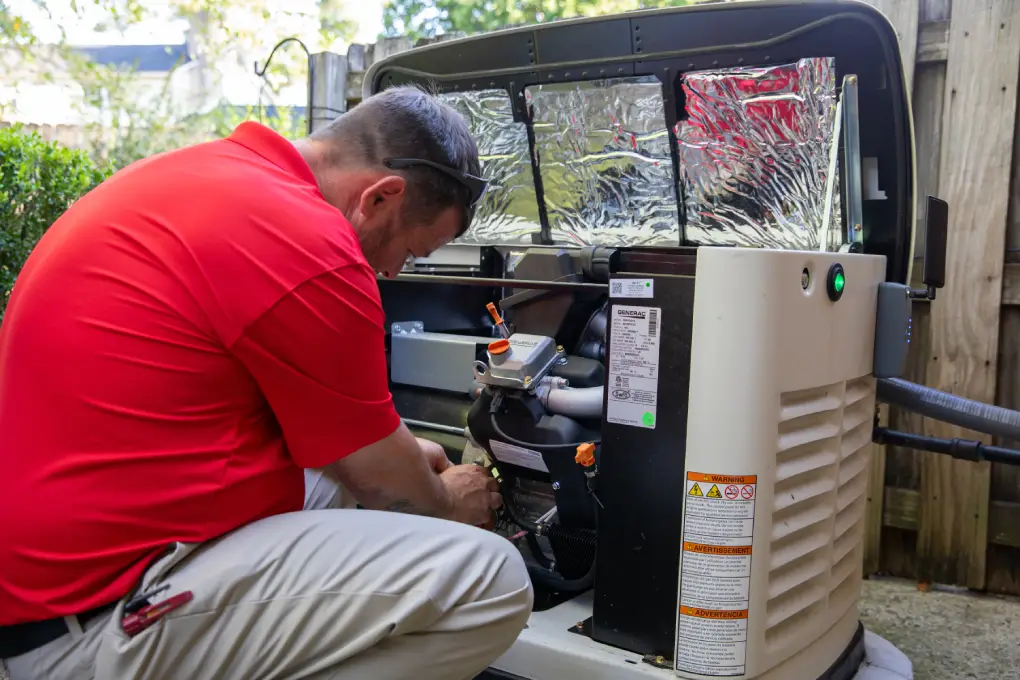
Standby generators, like those made by Generac, are permanently installed outside your home and connect directly to your electrical panel. They require an automatic transfer switch by code. These systems start on their own within seconds of an outage and shut off when grid power returns. You never have to go outside, pull a cord, or run extension cords across your floor.
A W Electric installs standby generators and transfer switches throughout the Evans and Augusta area. Their team handles the permits, the panel work, and the full inspection, so you’re covered from start to finish. You can learn more about what goes into generator installation in Evans and what to expect from the process.
Frequently Asked Questions
Is it illegal to connect a generator to your house without a transfer switch?
Yes, in most cases it is. Georgia follows the National Electrical Code, which requires a transfer switch or approved interlock kit for any generator connected to your home’s wiring. Doing it without one violates code, voids permits, and may void your homeowner’s insurance.
Can I use a generator with just extension cords instead of a transfer switch?
Yes, and this is the only safe way to use a generator without a transfer switch. You plug appliances directly into the generator using heavy-duty outdoor extension cords. This keeps the generator separate from your home’s wiring and avoids any risk of backfeed.
What is backfeed, and why is it dangerous?
Backfeed happens when your generator sends power back through your meter and onto the utility lines outside. Utility workers may not know your generator is still running. That live electricity on the line can electrocute them. A transfer switch prevents this by cutting the connection between your home and the grid before generator power is allowed to flow.
How do I know what size generator my home needs?
It depends on what circuits you want to power and the total wattage of those loads. A licensed electrician can calculate this based on your panel and your priorities. You can also read more about how many kW you need to run a house as a starting point.
Do I need a permit to install a transfer switch in Georgia?
Yes. A transfer switch installation requires an electrical permit in Georgia. A licensed electrician must pull the permit and complete the work. A W Electric handles all permits and inspections as part of their generator installation service, so you don’t have to figure that out on your own.
Get Your Generator Installed the Right Way in Evans
Connecting a generator to your house without a transfer switch is not a safe shortcut for most Evans homeowners. The risks include electrocution, fire, code violations, and insurance problems. The only exception is using extension cords to power individual appliances directly from the generator, which keeps your home’s wiring completely out of the picture.
If you want reliable backup power for your whole home, a transfer switch is the right move. A W Electric has been serving the Evans and Augusta area since April 2020, handling generator installations, panel work, and everything in between. Visit awelectricllc.com to contact their team and set up a safe, code-compliant generator connection for your home.